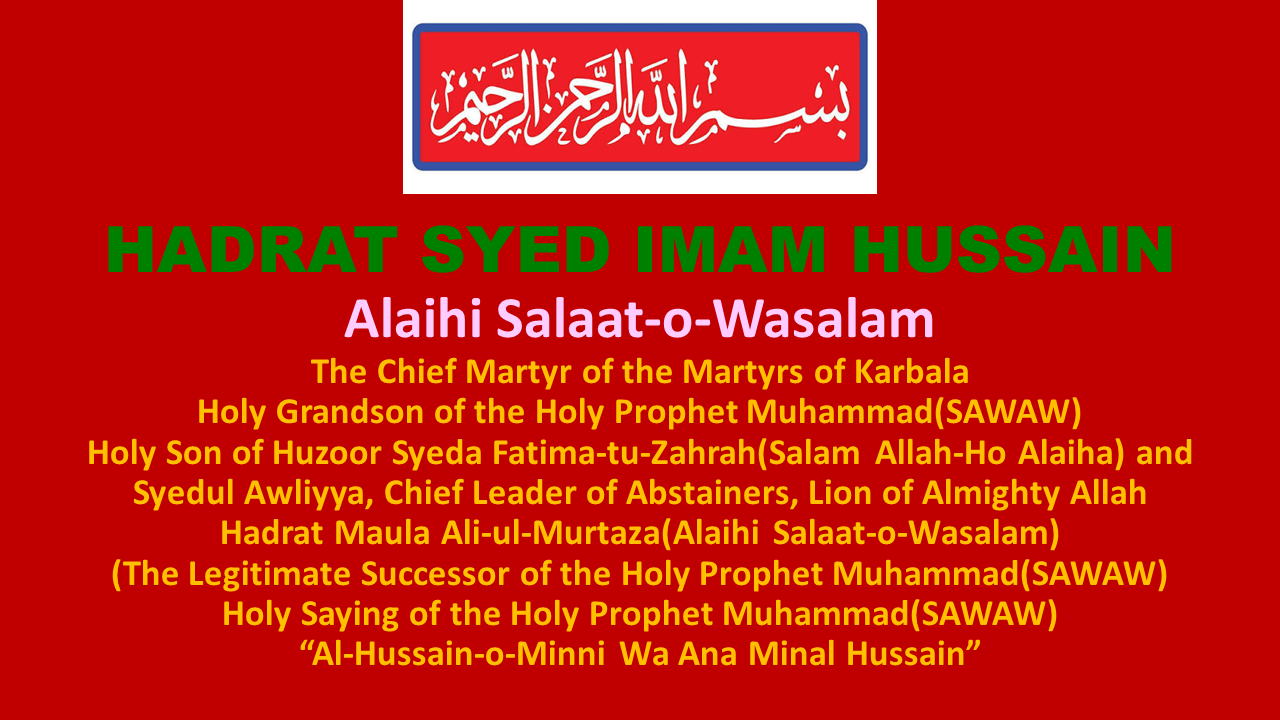
The Eternal Sacrifice of Karbala: A Stand for Truth Against Tyranny
The incident of Karbala stands as the most profound and heart-wrenching event in the history of Islam. It was not a war in the conventional sense, nor can it be compared to any military engagement known to humanity. War, by its very definition, takes place between two nations or states, each equipped with vast armies, unlimited resources, and destructive weapons. Karbala was none of this. It was an act of sheer tyranny and oppression carried out against a small, defenseless group of people whose only crime was their unwavering faith in Islam and their profound love for the Holy Personality of Hadrat Syed Imam Hussain, the grandson of the Holy Prophet Muhammad.
The True Nature of Karbala
The tragic events that unfolded on the plains of Karbala on the 10th of Muharram, 61 AH (680 CE), were not a battle between two equal forces. On one side stood Imam Hussain with a small band of 72 devoted companions and family members, including women and children. On the other side stood the massive army of Yazid ibn Muawiyah, numbering in the thousands, fully armed and equipped. This disparity alone refutes any claim that Karbala was a war; it was a massacre, a brutal display of power by a tyrant who sought to crush the voice of truth.
The sole objective of Yazid was to obtain the oath of allegiance from Imam Hussain. He wanted the grandson of the Prophet to legitimize his illegitimate rule, to sanctify his corruption, and to give religious credibility to his worldly ambitions. Imam Hussain, however, understood that endorsing Yazid would mean betraying the very essence of Islam. He famously declared that he would never give his hand to a tyrant like Yazid, even if it meant facing death. This refusal to submit to tyranny was the spark that ignited the tragedy of Karbala, and it is this defiance that makes Karbala a timeless lesson for all of humanity.
The Journey of Truth
Imam Hussain’s journey from Medina to Karbala was not a military campaign but a spiritual mission. He was fully aware of the dangers that awaited him, yet he chose to proceed because he was guided by the principles of justice and truth. The people of Kufa had invited him, but they later abandoned him, leaving him to face the enemy alone. This betrayal adds another layer of sorrow to the tragedy, as it demonstrates the fickleness of worldly promises and the importance of remaining steadfast in one’s convictions.
The Unforgettable Sacrifices
As the days passed in the scorching desert of Karbala, the small camp of Imam Hussain was subjected to unimaginable hardships. The water supply was cut off, and the children cried out in thirst. The enemy had surrounded them, not to fight a battle, but to starve them into submission. Yet, even in the face of such cruelty, the companions of Imam Hussain stood firm, ready to sacrifice their lives for the cause of Islam.
The sacrifices made in Karbala were unparalleled. Imam Hussain lost his beloved son, Ali Akbar, his brother, Abbas ibn Ali, and his infant son, Ali Asghar. Each martyrdom was a testament to the strength of faith and the depth of love for the Almighty. The scene of Abbas ibn Ali returning from the river with empty water skins, only to be martyred while trying to bring water to the children, remains one of the most heart-wrenching moments in history. The martyrdom of Imam Hussain himself, after a day of relentless fighting and immense thirst, was the culmination of a life dedicated to God and truth.
The atrocities did not end with the slaughter. The women and children of the Prophet’s family were taken as captives and paraded through the streets of Kufa and Damascus. The head of Imam Hussain was carried on a spear to be presented to Yazid. This was not a victory; it was a crime against humanity and a disgrace to the name of Islam. Yet, through these trials, the women of the Ahl al-Bayt, particularly Lady Zainab, raised their voices and exposed the tyranny of Yazid, ensuring that the message of Karbala would never be forgotten.
The Universal Lessons of Karbala
The incident of Karbala is a reminder that the struggle between truth and falsehood is eternal. It shows that standing up for justice and integrity is more important than submitting to tyranny, even when the odds are insurmountable. The legacy of Imam Hussain is not confined to any sect or religion; it is a universal call to uphold the values of freedom, dignity, and faith.
The only true religion in this world is Islam, a religion of peace, justice, and submission to the Almighty. Whosoever embraces Islam with sincerity can find safety and security from the horrors of Hell and draw nearer to Allah. The tragedy of Karbala reaffirms this truth. It demonstrates that those who sacrifice their lives for God and His faith are not lost; they are elevated to the highest ranks of Paradise. Imam Hussain and his companions are eternal symbols of what it means to live and die for Allah.
The Emotional and Spiritual Impact on Believers
For those who truly understand the message of Karbala, the tragedy is not merely a historical event to be mourned but a source of spiritual awakening and moral guidance. The severe effects of this tragedy resonate in the hearts of believers, reminding them of the cost of standing for the truth. It fills them with a deep sense of love for Imam Hussain and his family, a love that transcends time and space.
Karbala teaches us that faith is not just a set of beliefs but a way of life that demands sacrifice and commitment. It challenges us to examine our own lives and ask ourselves whether we are willing to stand for what is right, even when it is difficult. It reminds us that true salvation lies in following the path of the Prophets and their descendants, a path that leads to the nearness of Allah.
The Names of the Martyrs
It is essential to honor the memories of those who gave their lives for the sake of Islam. The martyrs of Karbala included Imam Hussain himself, his brothers, his sons, his nephews, and his loyal companions. Each name represents a story of courage, faith, and sacrifice. Remembering them brings the tragedy to life and ensures that their sacrifices are never forgotten.
The Eternal Message of Karbala
Karbala is not just a tragedy; it is a message that continues to inspire generations. It is a reminder that the voice of truth can never be silenced, no matter how powerful the forces of falsehood may be. It is a testament to the fact that those who stand with God will always emerge victorious, even if they are defeated in the physical sense.
The lessons of Karbala are as relevant today as they were 1,400 years ago. In a world filled with injustice and oppression, the spirit of Karbala calls upon us to rise against tyranny and to defend the values of truth, justice, and faith. It urges us to follow the example of Imam Hussain, who chose to die with dignity rather than live in submission to a tyrant.
Conclusion
In conclusion, the incident of Karbala was not a war but an act of oppression against the most sacred personalities in Islam. It stands as a shining example of what it means to stand for truth against falsehood. The sacrifices made by Imam Hussain and his companions have left an indelible mark on the hearts of believers, serving as a source of inspiration, guidance, and hope.
Whosoever embraces Islam and follows the teachings of the Prophet and his Ahl al-Bayt can find safety and security from the torment of Hell and attain the nearness of Almighty Allah. The tragedy of Karbala is a powerful reminder of this truth, and its message continues to resonate in the hearts of all those who seek to lead a life of faith and devotion. May the sacrifice of Imam Hussain forever serve as a beacon of light for humanity, guiding us toward the path of righteousness and salvation.